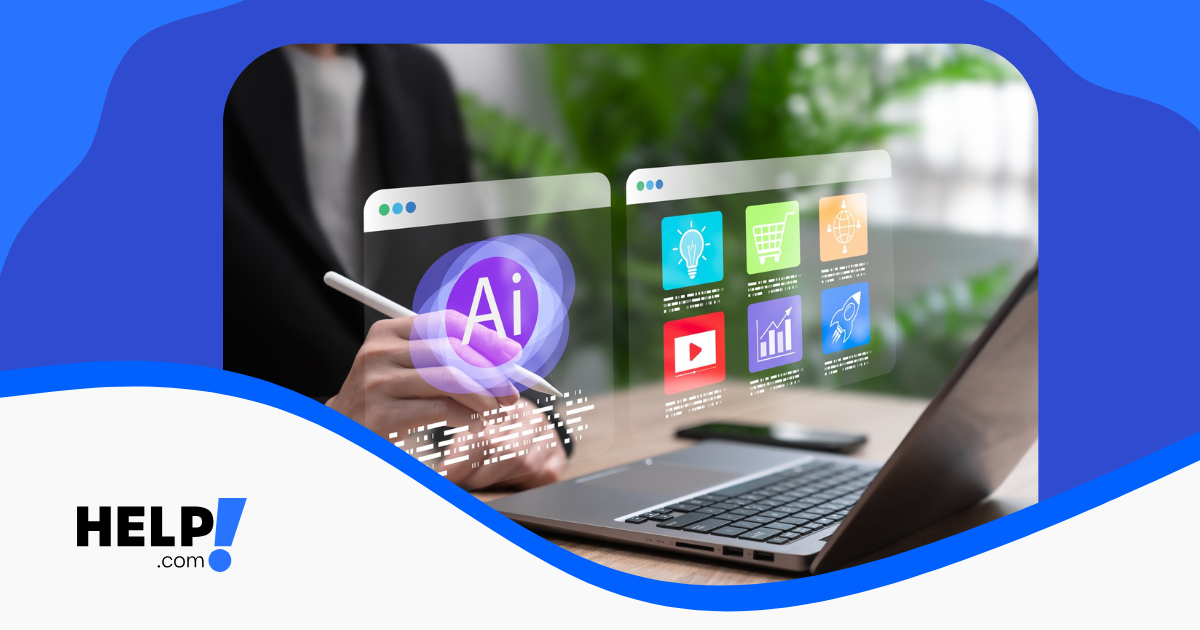
AI search uses large language models to answer questions directly by summarising and citing trusted websites. Websites that are clear, structured, accurate, and trustworthy are more likely to be surfaced in AI-generated answers. A “smart website” is one built to be easily understood by both humans and machines.
What Is AI Search?
AI search goes beyond traditional search results.
Instead of showing a list of links, AI search tools:
- Understand questions in natural language
- Summarise information from multiple sources
- Provide direct answers
- Cite or reference websites they trust
Examples include AI-powered assistants, conversational search tools, and generative answer engines.
This changes how websites are discovered — and what content performs well.
How AI Search Finds and Uses Websites
AI systems look for signals that indicate a website is:
- Clear – content is easy to interpret
- Accurate – information is consistent and reliable
- Structured – pages follow logical patterns
- Trustworthy – evidence of real people, businesses, and policies
Websites that reduce ambiguity are easier for AI to summarise and cite.
What Makes a Website “Smart”?
A smart website isn’t defined by technology alone.
It’s defined by how well it communicates.
A smart website:
- Explains what it does in plain language
- Answers real user questions
- Uses headings and sections consistently
- Connects related pages logically
- Is easy to update and improve over time
Smart websites perform better in both traditional SEO and AI-driven discovery.
Key Elements of AI-Search-Friendly Websites
1. Clear Page Purpose
Each page should answer one primary question.
Avoid pages that try to:
- Rank for everything
- Combine unrelated topics
- Hide information behind marketing language
AI prefers pages with a single, obvious intent.
2. Structured Content
Structure helps machines understand meaning.
Best practices include:
- One main topic per page
- Descriptive headings
- Bullet points for lists
- FAQs for common questions
This structure improves extraction and summarisation.
3. Direct Answers
AI tools prioritise content that answers questions without unnecessary filler.
Good answers:
- Are concise
- Avoid vague claims
- Use consistent terminology
If a human can quickly understand your page, an AI can too.
4. Trust Signals
AI systems look for evidence that a website is legitimate.
Trust signals include:
- Clear business identity
- Contact details
- Policies (privacy, terms)
- Reviews or testimonials
- Up-to-date content
Trust matters more than keywords.
5. Internal Linking and Context
AI uses context to understand meaning.
Strong websites:
- Link related pages together
- Use consistent naming
- Avoid orphan pages
This creates a knowledge graph AI can follow.
AI Search vs Traditional SEO
AI search doesn’t replace SEO — it builds on it.
| Traditional SEO | AI Search |
| Keywords | Questions and intent |
| Rankings | Citations and summaries |
| Clicks | Direct answers |
| Optimisation | Clarity and structure |
Websites that already follow SEO best practices adapt more easily to AI search.
Common Myths About AI Search
“AI will replace websites”
AI still needs source material. Websites that provide high-quality information remain essential.
“Only big brands will appear”
AI favours clarity and usefulness, not brand size alone.
“More content is better”
Focused, accurate content outperforms large volumes of thin pages.
How to Prepare Your Website for AI Search
Step 1: Audit Your Pages
Ask:
- What question does this page answer?
- Is the answer obvious?
- Is anything outdated or unclear?
Step 2: Improve Structure
- Add headings where needed
- Break long paragraphs
- Introduce FAQs on key pages
Step 3: Strengthen Trust
- Add clear contact information
- Publish policies
- Show real-world proof
Step 4: Keep Content Updated
AI systems prefer current, accurate information.
Regular updates signal reliability.
How Help.com Supports Smart Websites
Help.com focuses on:
- Helping people understand website choices
- Reducing complexity in creation and management
- Encouraging clear, structured content
- Supporting visibility across both search engines and AI-powered tools
The goal is not to “game” AI search — but to build websites that communicate well.
FAQs
What is AI search in simple terms?
AI search answers questions directly by summarising information from trusted websites instead of only listing links.
How do I optimise my website for AI search?
Focus on clear structure, direct answers, trust signals, and accurate content. Structured data and FAQs also help.
Does structured data guarantee AI visibility?
No, but it improves clarity and machine readability, which increases the chance of being understood and cited.
Is AI search replacing SEO?
No. SEO fundamentals still matter. AI search builds on strong SEO rather than replacing it.
Do I need technical skills to prepare for AI search?
Not necessarily. Many improvements focus on content clarity and structure rather than on complex development.
Final Thought
AI search rewards websites that are helpful, clear, and trustworthy. By focusing on structure, intent, and accuracy, you can build a website that performs well today — and remains discoverable as search continues to evolve.
Internal benchmark notes (not for publishing)
- Authority-first, vendor-neutral tone
- Strong AI extractability
- Supports internal linking to:
- How to Create a Website
- Builder vs Hosting
- Best-for pages
- Ideal for FAQ + educational schema
If you want, next I can:
- Add interactive diagrams / visual blocks
- Write cluster pages under this hub
- Tailor this to Help.com AI Search features
Create a content update playbook for ongoing AI relevance
 Domains
 Company